
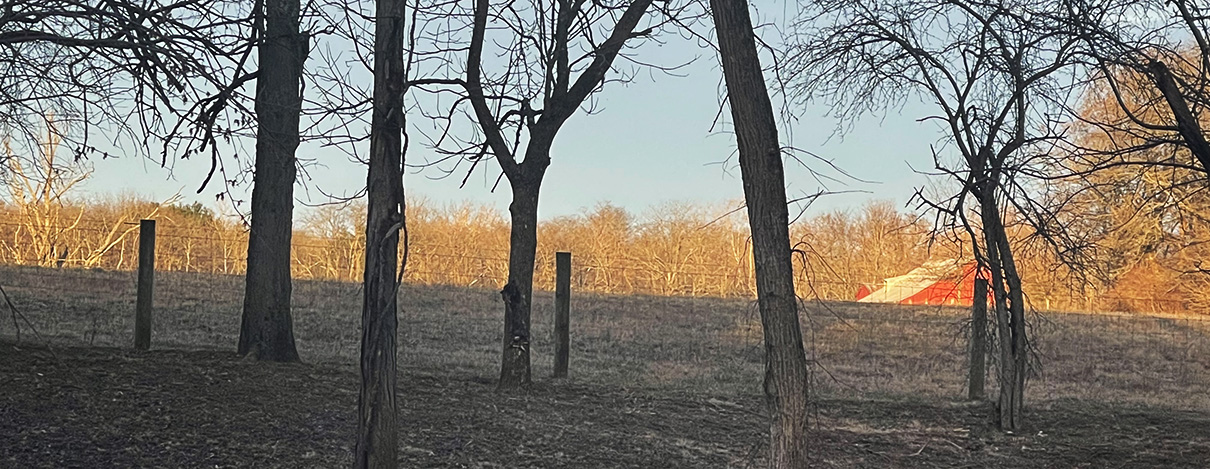
Helping small family farms earn more per acre with the right blend of Wagyu genetics, processes, and hands-on advice.
Over the past few years our production has transitioned from mainly processed Wagyu production to high-quality breeding stock.
Our passion for helping small family farms become more profitable has changed our profile to providing family farms a way to make more profit per acre — so that small farms can not only survive, but become a major source of family income. We have the right blend of genetics and processes to make this possible. We refer to this as "boutique farming": a way to provide products that are better tasting, healthier, and more desirable than products produced by corporate farms.
The following sections describe the reasons we were able to make our processed-meat production successful when it was our primary focus. We now only do it upon special request. The knowledge gained through years of trial and error enables us to help you develop the right plan to succeed. Even larger American-breed ranches (Angus, Hereford, etc.) will benefit greatly from using some Wagyu genetics. The good DNA traits in Wagyu are dominant, and can quickly change your entire beef production for all future offspring.
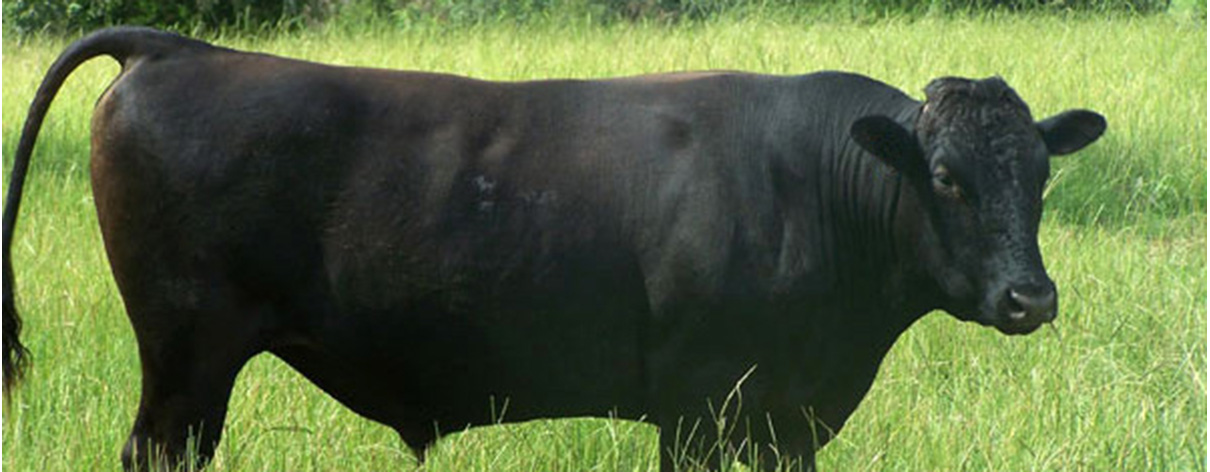
The word Wagyu refers to all Japanese cattle — "Wa" means Japanese and "gyu" means cattle. The breed was developed by crossing British breeds brought to Japan with the native Asian cattle local to the area in the 1800s, when the government wanted to introduce Western food habits and culture. Most cattle imported from Europe were breeds such as Brown Swiss, Devon, Shorthorn, Simmental, and Ayrshire.
The Wagyu breed variations in Japan are greater than almost any other breed variation throughout Europe and Britain. There are three important black strains: the Tajima, Kedaka, and Fujiyoshi.
The Japanese Black was primarily used as the "workhorse" prior to the turn of the 20th century. It was improved during the Meiji Era through crossbreeding with foreign breeds, and was certified as indigenous Japanese beef cattle in 1944. It is raised in most prefectures of Japan, and more than 90% of Wagyu raised and fattened in Japan is of this breed. Fine strips of fat are found even in its lean meat — the marbling — with a buttery, tender texture that dissolves in one's mouth.
Wagyu was first brought to America from Japan in 1976 — two red bulls and two black bulls, crossbred with Angus cows and a few other Continental breeds. In 1993 the first black Wagyu females were imported into America, leading to the first full-blooded Wagyu cattle bred in the United States.
Between 1994 and 1997, more than 200 full-blooded Wagyu cattle were imported to the United States from Japan.
Wagyu were declared a national treasure in Japan in 1997, and a ban was placed on the export of Wagyu cattle outside of Japan.
In recent times, more Wagyu genetics are being internationally exchanged through embryos and semen. Australia and the United States are major sources of some of the best Wagyu genetics and products available today.
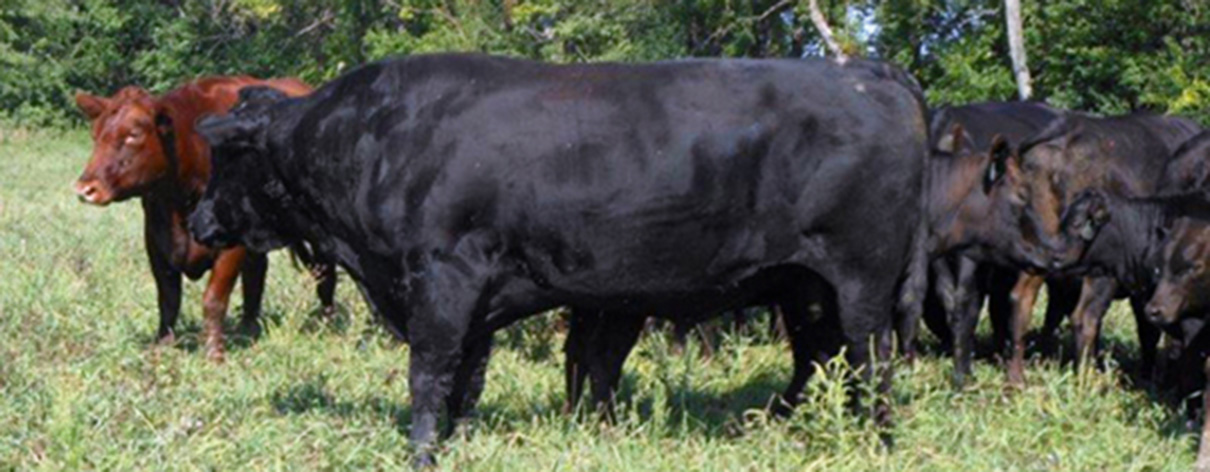
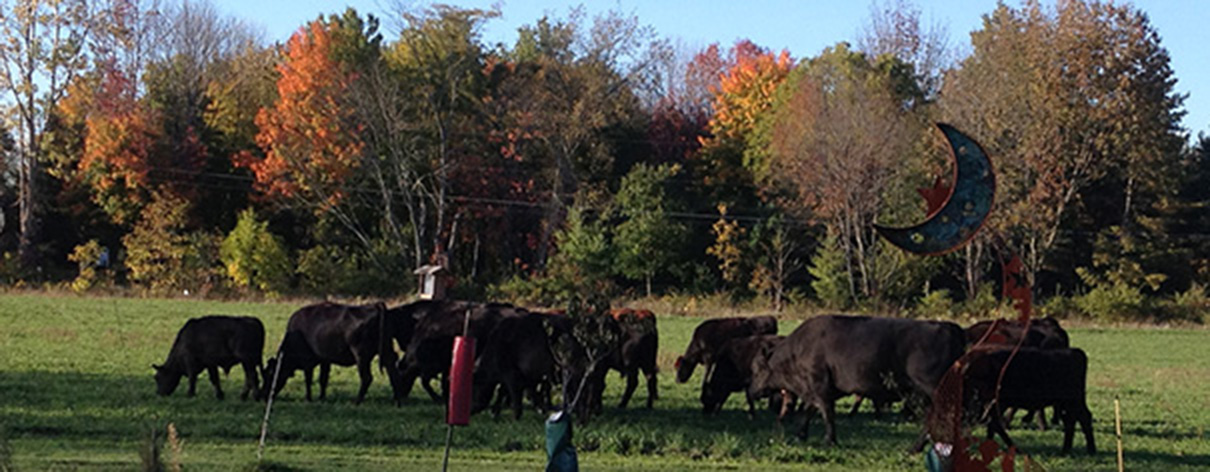
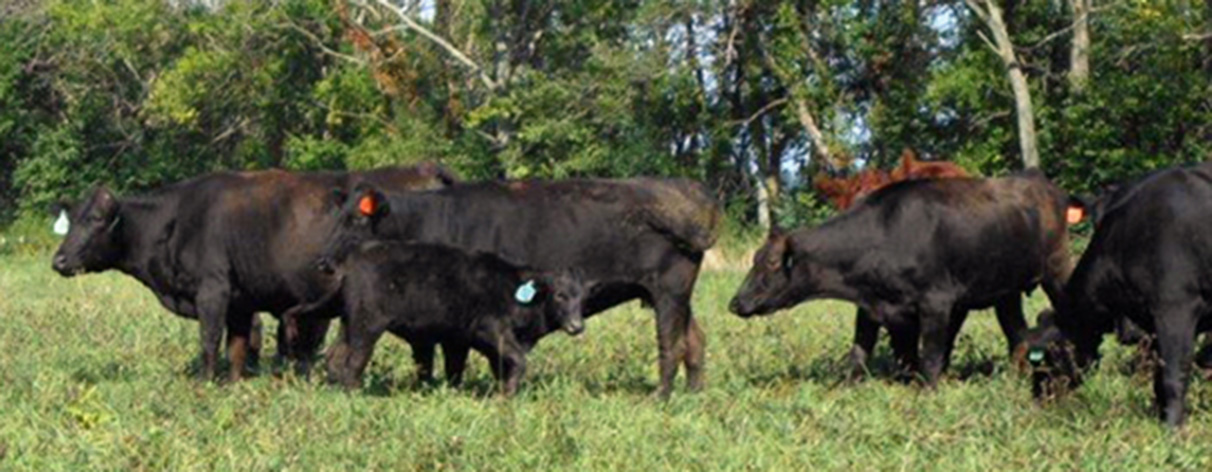
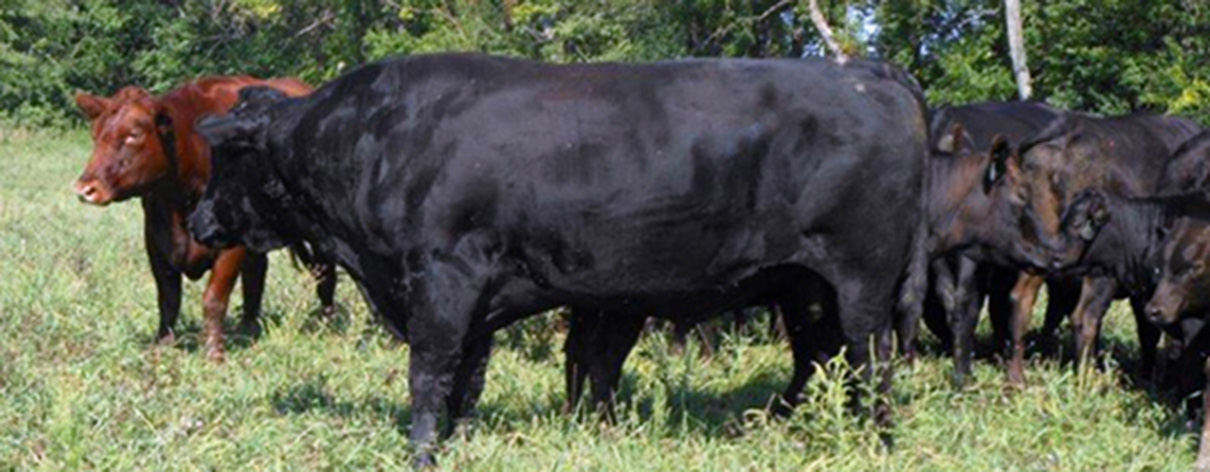
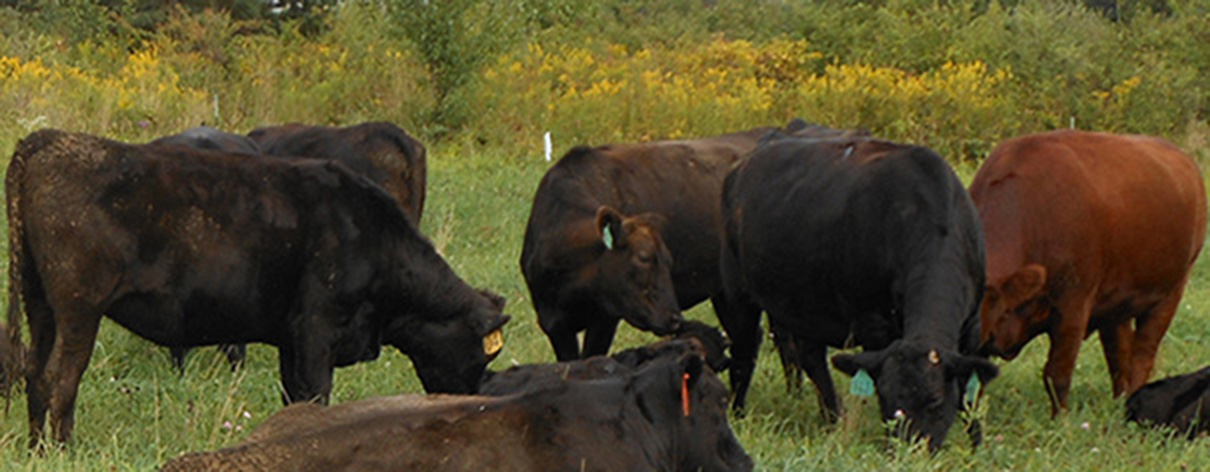
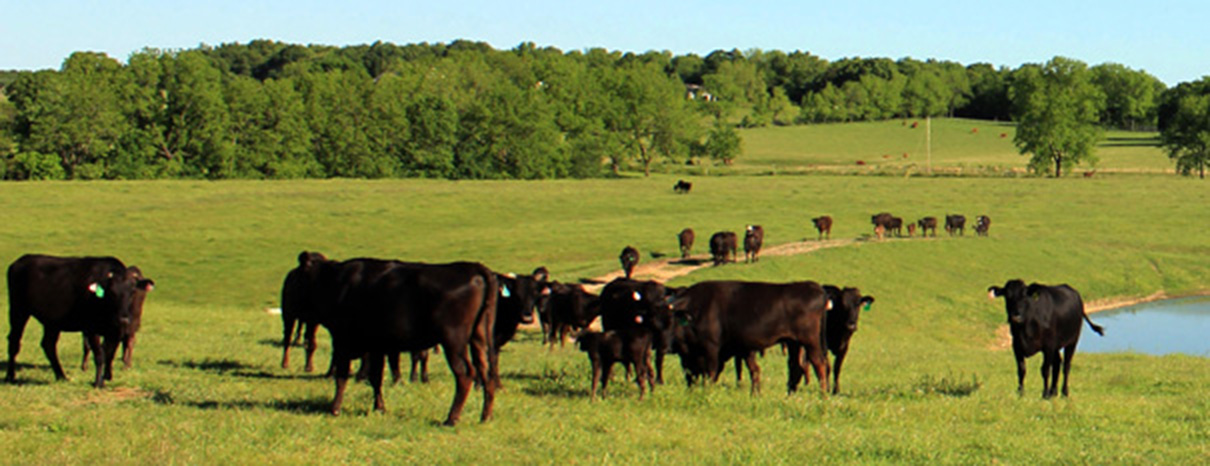
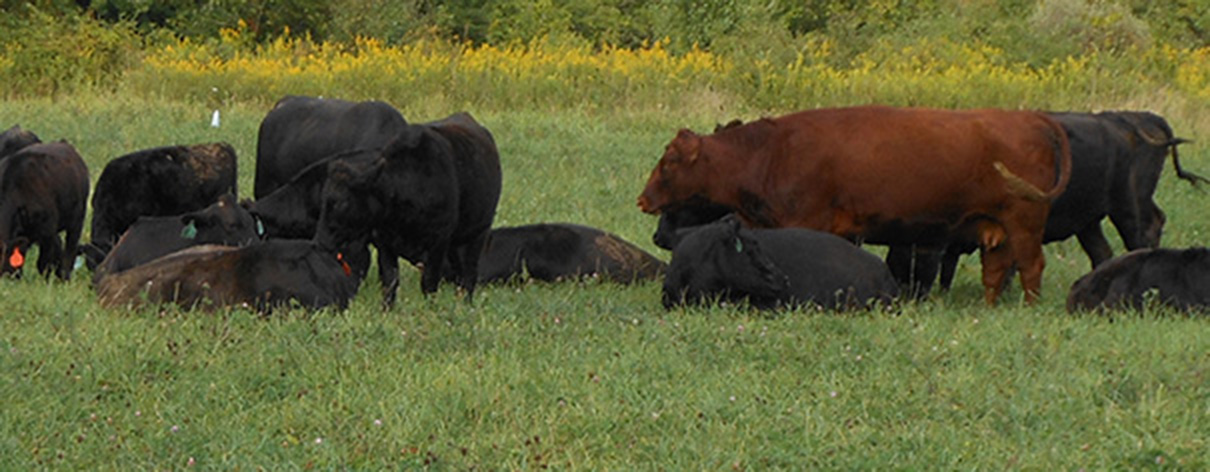
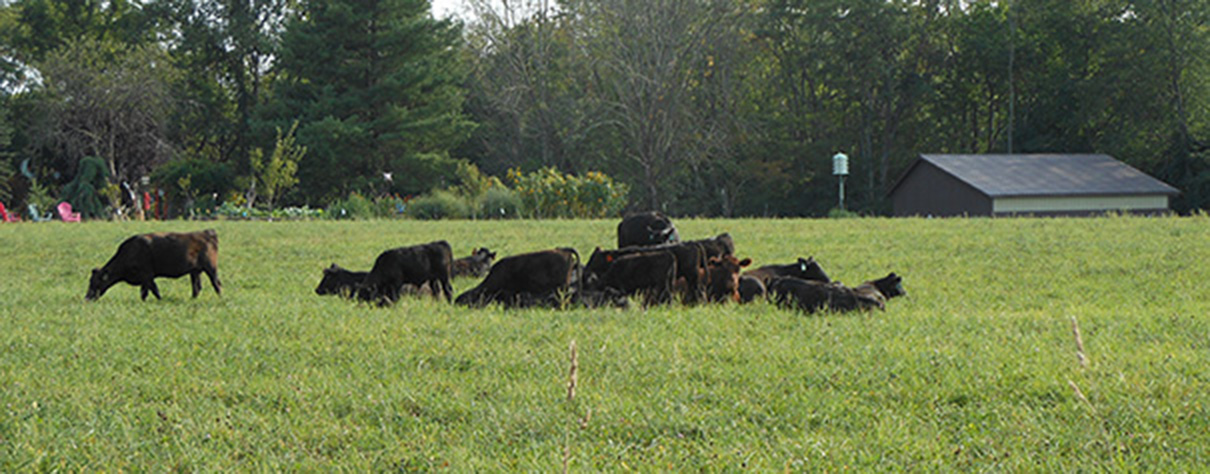
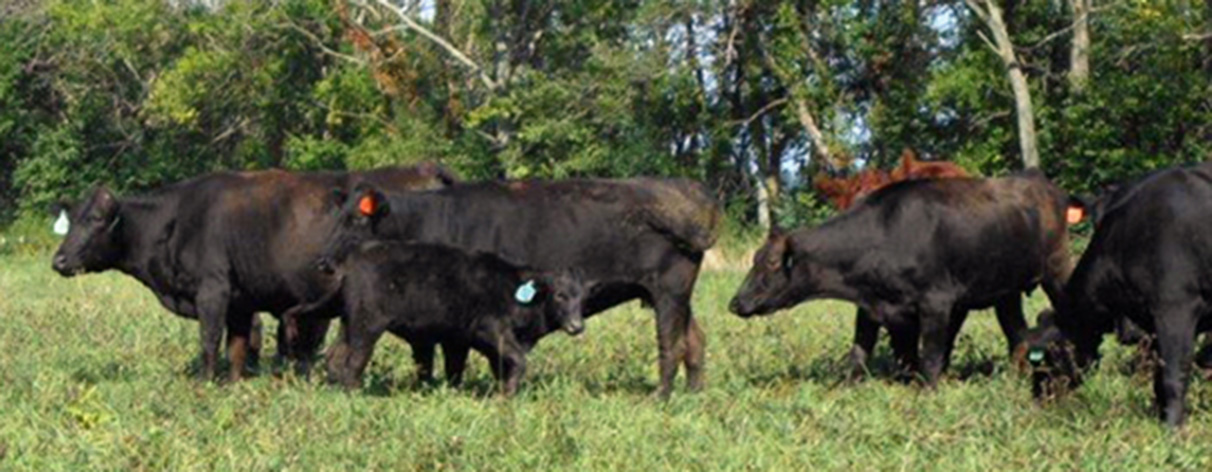
Our beef comes from mostly Full-Blood and Purebred Wagyu calves born on Eversole Run Farm to mother cows that were also born and raised here. Our cattle are the product of many years of a highly selective breeding program designed to produce high-quality, healthy beef. The animals never leave the ranch and are able to free-graze right up to the point of being loaded into the trailer for transport. Our processed beef never goes to a feedlot. That's what makes Eversole Run Farm unique — humane, healthy, great-tasting, and environmentally friendly beef. You don't find that just anywhere.
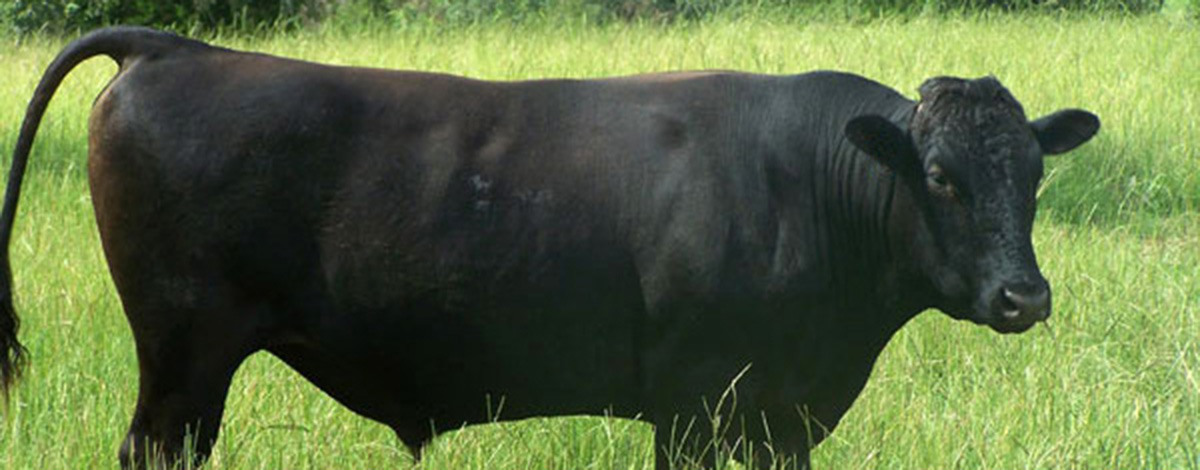
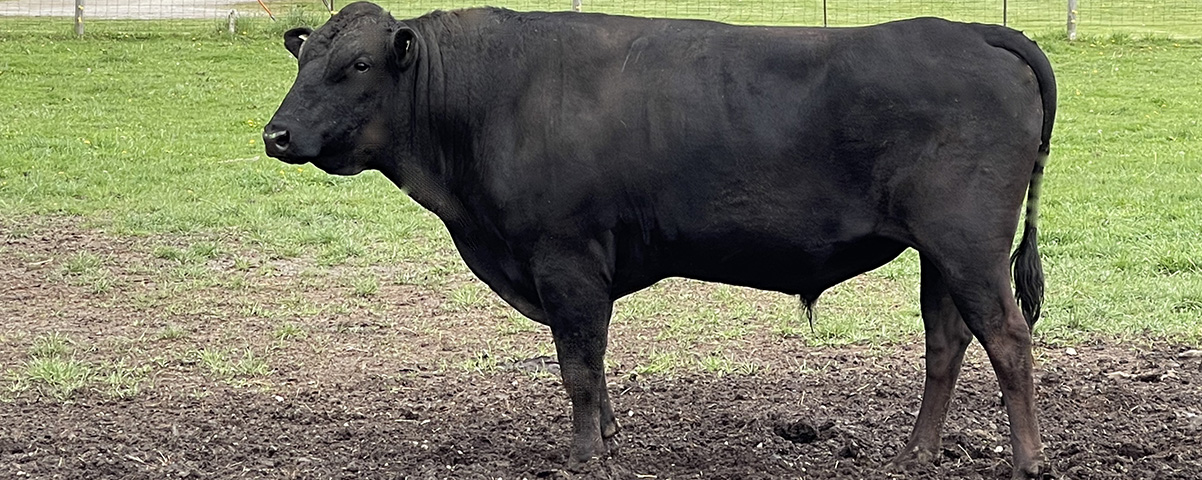
A Wagyu bull for your herd will vastly improve the flavor, tenderness, and marbling in your offspring. Wagyu meat quality is a dominant DNA trait for tenderness, marbling, fat consistency, and marbling fineness. Wagyu bulls are more prolific than typical Angus or other American-breed bulls — they've proven able to handle up to 1.5× as many cows, and have a longer breeding lifespan than most American breeds.
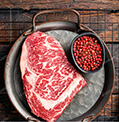
In general, about 75% of the offspring show noticeable improvement in production quality, enabling the majority of your offspring to achieve Prime or above-Prime beef with fine marbling. Below are recent samples from an Angus cow crossed with an Eversole Run Farm bull, processed June 2023.
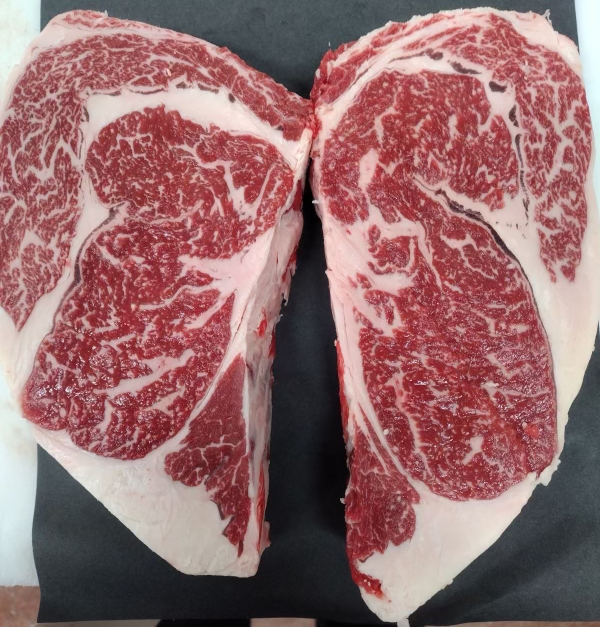
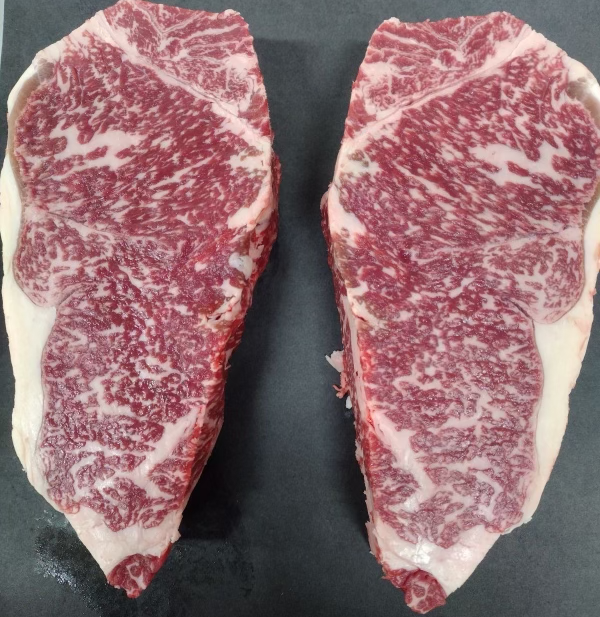
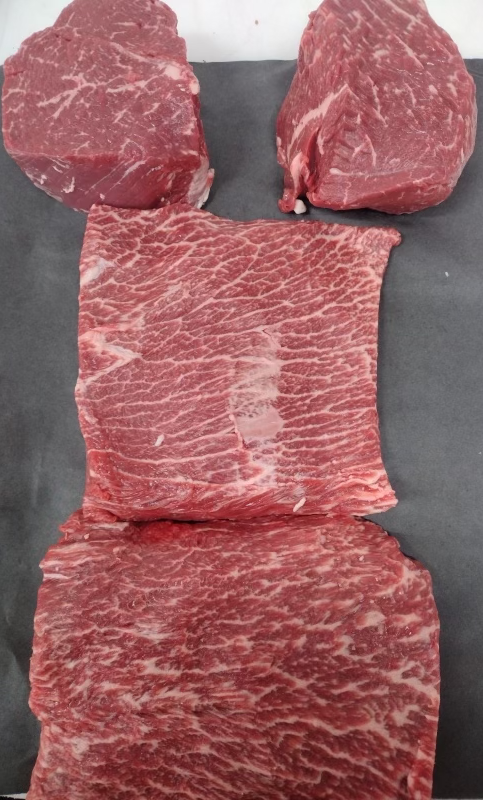
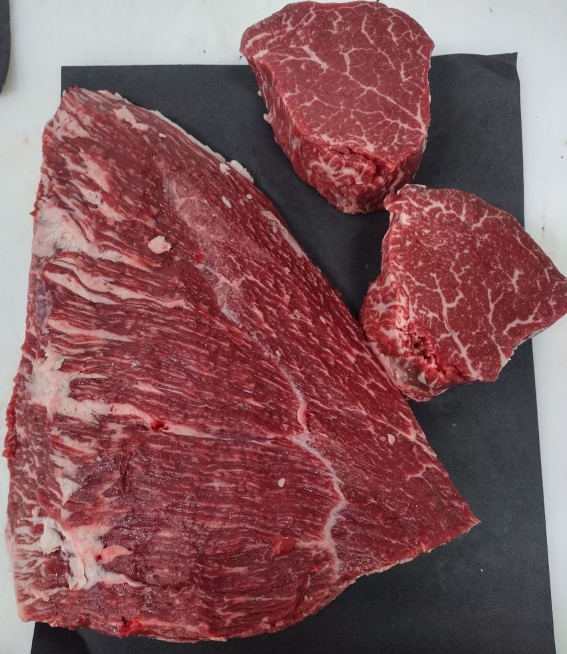
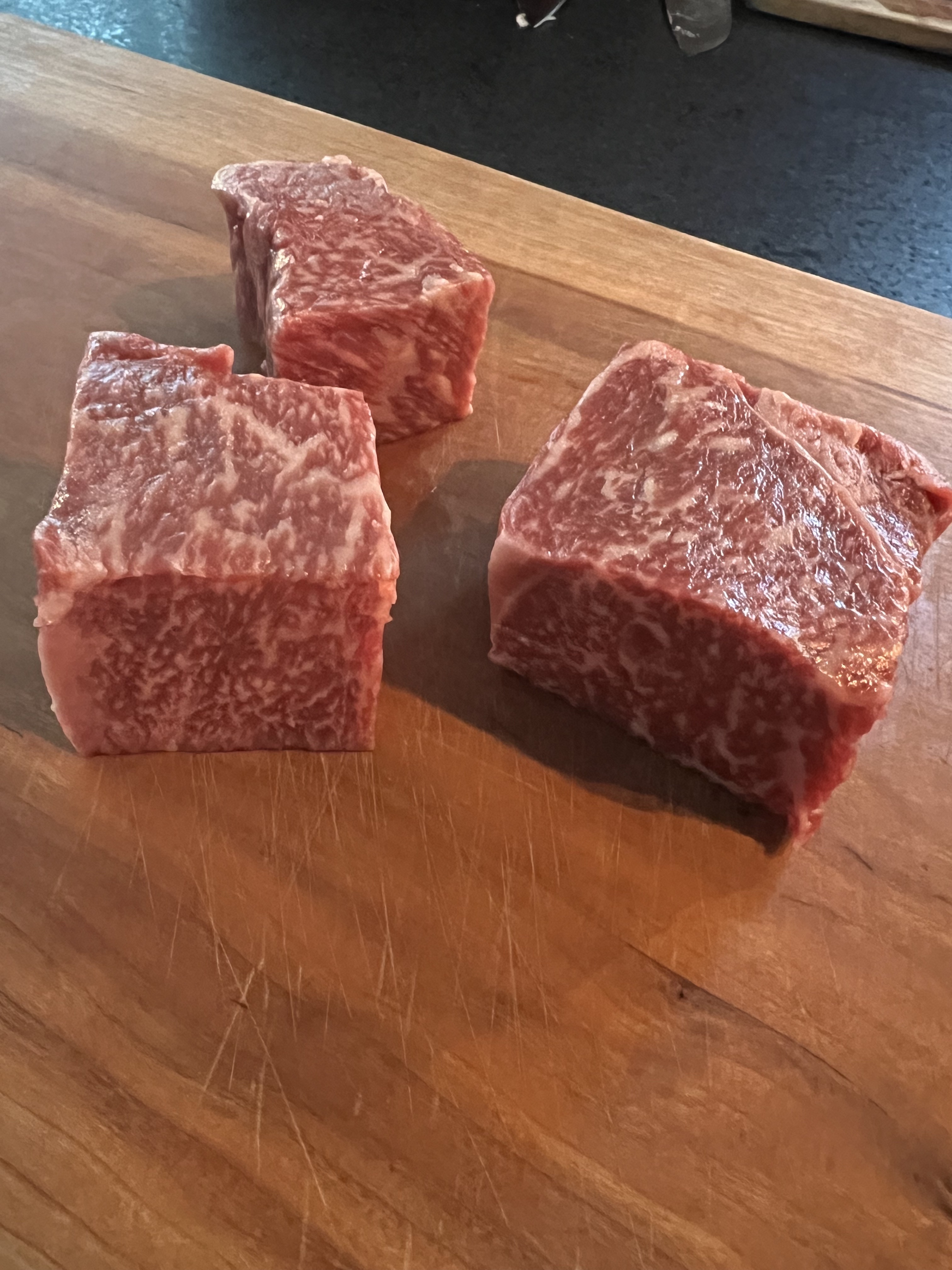
If you cook it right? Awesome — beef foie gras. Smooth, velvety, incomparably sweet, with a subtle tang of savor that lingers on the palate like a rare perfume. A Westerner used to eating a huge plate of aged beef might not fully appreciate the subtlety of Wagyu.
Highly-marbled Wagyu steaks are best not grilled over hot coals like other steaks, because the marbled fat will melt and flare up. Instead, sear it quickly — like tuna or foie gras — so it's blackened on the surface but extremely rare inside. Wagyu is a fragile creature under heat: treat it delicately and it will reward you with velvety perfection. Its physical structure is not unlike ice cream — it can literally melt and change into something very different from its ideal form.
You need to sear the outside, but if you let it sit under the heat too long, it will melt the ice cream inside — and you'll have an unappetizing mess.
Cooking guides. Tap a card below for a printable PDF.
Our cattle go through a two-to-five-month finishing process right on the farm — feedlots are never a part of it. They continue to graze in open paddocks with constant access to fresh water. Some are grass-finished, rarely eating any grain supplement. Most are COBFSS finished: in addition to their grass diet, they're given access to a Corn, Oats, Barley, Flaxseed, Soybean, and chopped Straw mix to ensure maximum fine marbling and exceptionally high Omega-3 and Omega-6. The Omega-3 profile is rich for beef — an excellent source of polyunsaturated fats without the marine-borne risks of certain open-sea fish. Processed-beef customers can request either finish; just let us know your preference.
Our cattle stay right on Eversole Run Farm until the day they're shipped for processing. The beef is then dry-aged for two to four more weeks to develop additional tenderness and flavor. The greater the fine marbling, the higher the grade. 100% of our beef grades above Prime — typically higher than the highest USDA grades possible. See the Photo Page for some pushed to a grade 10 for a local restaurant.
USDA and Japanese grades are based on quality and marbling. The USDA scale has three quality levels — Select, Choice, and Prime — with Prime the highest. Japan extended grading far beyond Prime to accommodate the marbling of the Wagyu breed: 12 levels, seven of them above USDA Prime. Today roughly 2% of traditional US cattle grade as Prime. Our cattle routinely grade at the Japanese level of BMS 6–10, controlled by age and feeding technique — which requires the right genetics in the DNA to reach.
See our breeding page for the genetics behind these grades: Bulls / Cows / Heifers / Embryos →
The Wagyu bloodline used at Eversole Run Farm includes some of the same genetics found in the Hyōgo Prefecture, Japan — Kobe is the capital of Hyōgo. Our bloodline carries extraordinary amounts of Omega-3 and Omega-6 in the marbling.
To boost the healthiness further, we use the Omega-Booster Method for raising and finishing. Cattle are raised on organic pastures of 50% clover and 50% special grass blends that keep them happy and healthy. At finishing age, they're supplemented with a special blend containing barley and flaxseed in amounts proven to raise Omega-3 even higher. A typical hamburger from Eversole Run Farm can contain over 200 milligrams of Omega-3. The health benefits of Omega-3 fatty acids are widely known — they can support heart health and lower triglycerides, and may help with rheumatoid arthritis and depression, according to reports and research.
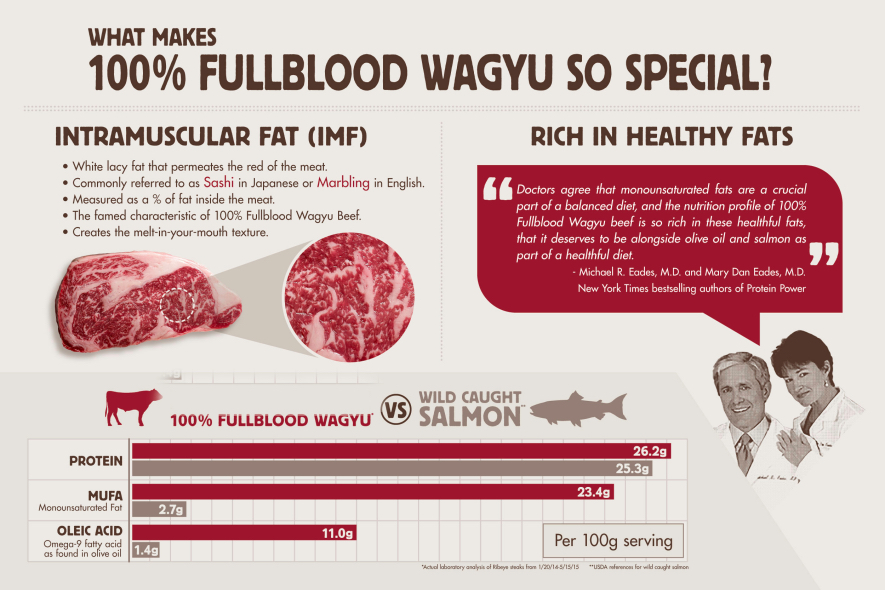
Another advantage of Wagyu is that it contains a much higher proportion of desirable (mono-unsaturated) fats than other beef. The mono-unsaturated to saturated fatty acid ratio (MUFA:SFA) is up to three times higher — around 3:1 in Wagyu versus about 1:1 in normal beef. That high concentration of beneficial Omega-3 and Omega-6, plus the higher ratio of mono to saturated fats, makes Wagyu beneficial to your health.
Even the saturated fat in Wagyu is different. Forty percent is a version called stearic acid, regarded as having minimal impact on raising cholesterol. So the profile of marbled Wagyu is more beneficial to human health — a healthier type of meat. — Dr. Crowe
Athletes, triathletes, and distance runners, take note.
Wagyu contains around 30% more CLA (conjugated linoleic acid) than other breeds — better for health because it helps maintain muscle while burning fat, increasing oxygen intake, metabolism, and energy production. Dr. Crowe notes CLA has potent anti-carcinogenic properties and acts as an anti-inflammatory agent.
It has a whole raft of potential health benefits — reducing heart disease, diabetes, asthma, and body-fat gain, and increasing the immune response. — Dr. Crowe
The best sources of CLA are beef and dairy. Wagyu contains the highest amount of CLA per gram of any foodstuff — about 30% more than other beef breeds, thanks to higher linoleic acid levels.
Eversole Run Farm raises all-natural American Wagyu beef (Kobe-style), meaning no antibiotics or growth hormones are present in the animal's system at the time of processing. Antibiotics are not used unless a veterinarian recommends treatment; if cattle receive antibiotics, they're removed from our program. Once off the antibiotics for the specified time, they're sent to the open market to be finished and sold by large processors in regular stores. Growth hormones are never used under any circumstance. Our beef also contains no artificial flavoring, coloring, chemical preservatives, or any other artificial or synthetic ingredient.
"Registered" means we register all of the Wagyu cattle on the farm with the American Wagyu Association. Some of our top breeding stock is also registered with the Australian Wagyu Association. Most Eversole Run Farm beef is full-blood or purebred Wagyu, with the same genetics used in Japan to produce Kobe beef — making it American Wagyu Beef (Kobe-style).
Antibiotics are only given to treat animals on a veterinarian's recommendation — never as a mere preventative. If an antibiotic must be used, we use only those approved by the relevant oversight bodies (USDA, FDA, etc.) and keep detailed records. If a drug has been used, documentation ensures no detectable residues are present before the animal is processed for human consumption.
Our commitment: All Eversole Run Farm finishing beef that receives antibiotics is sold on the open market and never processed as an Eversole Run product.
Nutritional & regulatory disclaimer: Health claims and statements regarding the nutritional profiles of Wagyu beef (including Omega-3, Omega-6, mono-unsaturated fats, and conjugated linoleic acid) are based on agricultural research and standard breed profiles. These statements have not been evaluated by the Food and Drug Administration (FDA). This product is not intended to diagnose, treat, cure, or prevent any disease. Individual dietary requirements and results may vary. For specific health or nutritional guidance, please consult a certified healthcare professional.
Geographical indication notice: "Kobe Beef" is a strictly regulated, protected geographical indication belonging exclusively to specific certified Tajima-gyu cattle raised in the Hyōgo Prefecture of Japan. Eversole Run Farm proudly breeds full-blood and purebred American Wagyu cattle utilizing these premium ancestral Japanese bloodlines to achieve a comparable premium marbling standard right here in Ohio.